In a market where the product is made, used, and thrown away, it is a waste
Waste becomes a problem.
And when a problem is present
It is researched, talked about, or publicly shared awareness about.
But who are the ones acting on it? Or the ones making the real change?
They are the Recyclers.
Who are the recyclers?
Recyclers are the ones with workers, companies, and specialised machines with the sole purpose of:
- Collecting,
- Sorting,
- Processing, and
- Converting the Waste materials into reusable raw materials.
They are the backbone of the recycling practice, addressing the “problem” and actually acting on it.
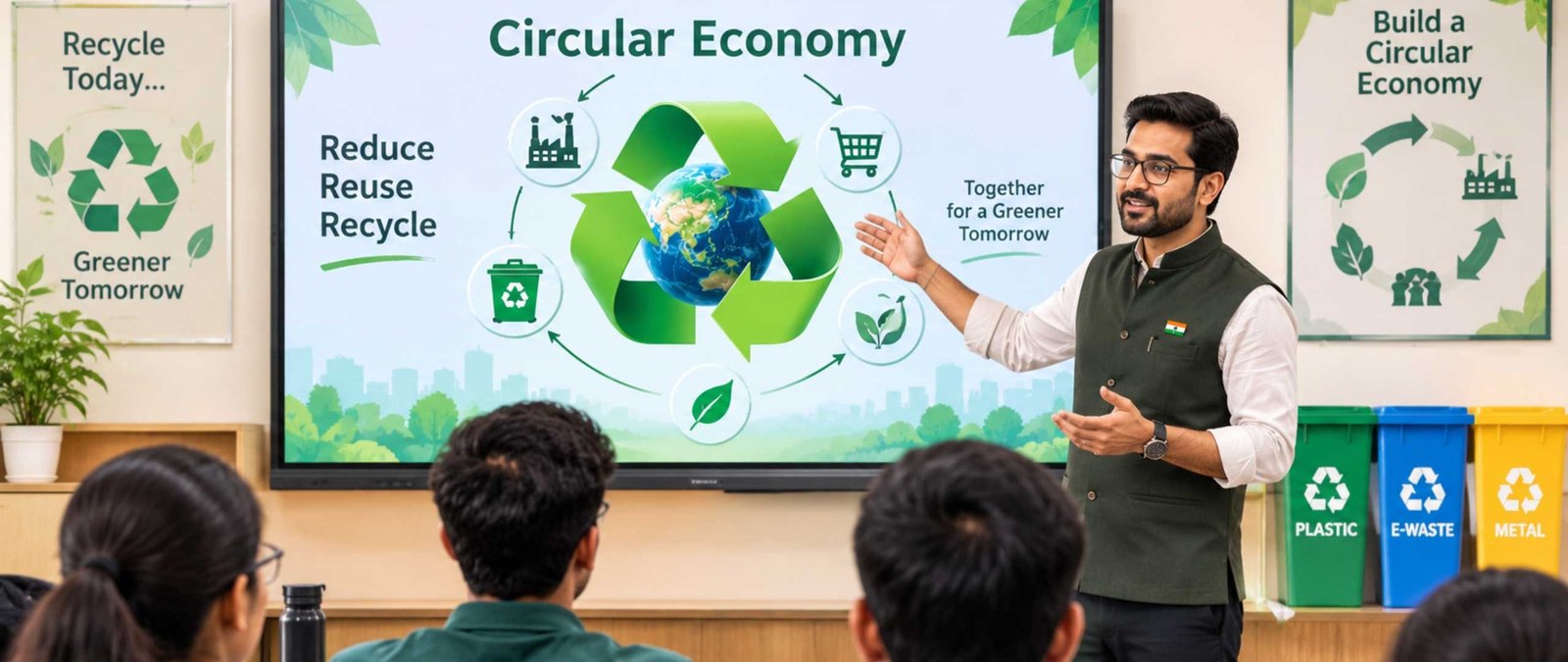
Recycling is not just an act of recovering materials. It is that one loop closing the production end-to-end into a full circle of a new resource cycle, or what businesses really wish to achieve- a circular economy.
What Circular Economy means for businesses?
For businesses, a circular economy means moving away from the traditional approach of Take, Make and Dispose and adopting a system where resources are kept in use for as long as possible.
Instead of treating discarded products and materials as the end of their journey, businesses are looking for ways to reuse, repair, refurbish and recycle them.
This changes how businesses approach their entire product lifecycle, from sourcing raw materials and manufacturing products to managing waste after consumption.
For example, an electronics manufacturer can work with recyclers to recover valuable materials from discarded electronic products. These recovered materials, when they meet the required quality and specifications, can re-enter manufacturing supply chains and reduce dependence on virgin resources.
In simple terms, a circular economy helps businesses shift from a waste-generating model to one that recovers resources.
And recyclers play an important role in making this transition possible.
How do recyclers achieve circularity?
A circular economy cannot work if discarded products and materials simply end up in landfills. They need to be collected, processed, and redirected towards productive use. This is where recyclers make a difference.
They help close the loop between waste generation and resource recovery through several activities:
1. Collecting Waste Materials
Recyclers establish collection channels to bring discarded products and materials from businesses, industries, and consumers into the recycling process.
2. Sorting and Segregating Waste
Different materials require different recovery processes. Recyclers sort and segregate collected waste to identify materials that can be reused, processed, or recycled.
3. Dismantling and Processing
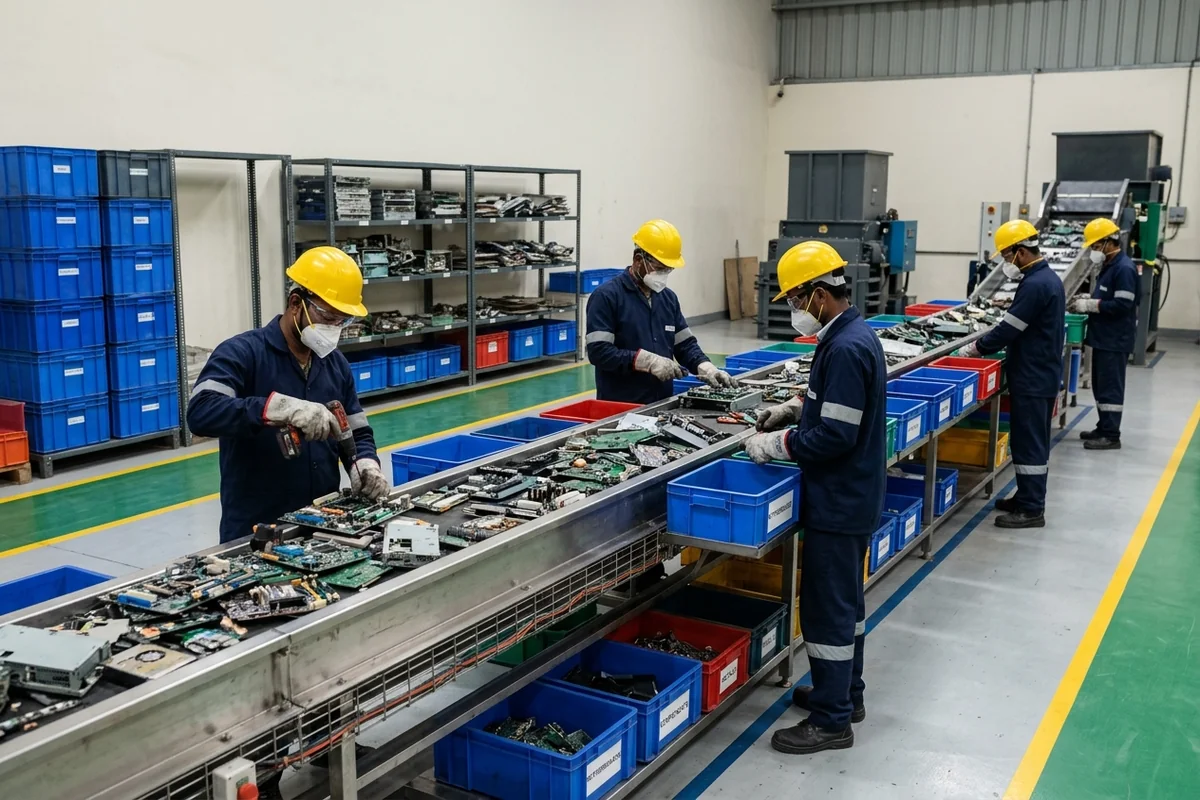
For products such as electronic equipment, recyclers dismantle products into smaller components and separate recoverable materials for further processing.
4. Recovering Valuable Resources
Through suitable recycling technologies, recyclers recover materials such as metals, plastics and other resources that can be used in new production cycles, subject to their quality and specifications.
5. Connecting Recovered Materials to Industries
Recyclers help channel recovered materials towards manufacturers and other downstream industries that can use them as secondary raw materials.
6. Supporting Responsible Waste Management
Through authorised recycling processes, proper documentation and traceability, recyclers also help businesses manage their waste responsibly and meet applicable EPR obligations.
Reusing waste as a resource becomes the foundation on which businesses build a circular economy.
What is ARKCA Recycler’s contribution here?
ARKCA Recyclers have been a trusted recycler in collecting and handling E-waste.
Every discarded electronic product contains materials that may still hold value. However, recovering that value requires proper collection, dismantling, segregation, and recycling.
ARKCA Recyclers contributes to this process by helping businesses manage their e-waste through:
1. Organised E-Waste Collection
ARKCA Recyclers helps businesses channel their discarded electronic equipment towards appropriate recycling processes through collection and handling services.
2. Responsible Dismantling and Segregation
Electronic products are dismantled and separated into different material categories, making it easier to identify components suitable for further recovery.
3. Resource Recovery
Through recycling and recovery processes, valuable materials are recovered from discarded electronics and prepared for further use in appropriate applications.
4. Traceable E-Waste Management
Responsible handling, documentation, and traceability help businesses maintain better oversight of their e-waste management activities.
5. EPR Credit Transfer Support
ARKCA Recyclers also supports the e-waste EPR ecosystem through traceable EPR credit transfer, helping eligible businesses address their applicable EPR responsibilities.
If you give us a single old electronic device, then it is one less e-waste item in the landfill. This is where we make a difference, and you can be a part of it too.